Design Articles

Design Defined Melissa Balkon Design Defined Melissa Balkon

Why color is your most powerful visual brand asset

Before someone reads your business name or notices your logo, color has already shaped how they feel about your brand. In this post, we break down why color works faster than your business' other visual brand assets, how it creates instant emotional context, and how it can help your business be more recognizable.
Before someone reads your business name or notices your logo, color has already shaped how they feel about your brand. In this post, we break down why color works faster than your business’ other visual brand assets, how it creates instant emotional context, and how it can help your business be more recognizable.

When most people think about branding, they immediately jump to the logo. And while logos are important, there’s another element that’s often even more powerful — and far more underestimated: Color.

Color is one of the most influential tools in your brand toolkit. It works faster than words, faster than logos, and often without people even realizing it. After more than 20 years as a designer — and after working on dozens (if not hundreds) of brand identities — I’ve seen firsthand how strategic color choices can make or break a brand.

Let’s talk about why color matters so much, and how to use it intentionally in your business.

Why Color Matters More Than You Think

Color is powerful for two main reasons:

  1. It communicates incredibly quickly at a subconscious, emotional level

  2. It’s one of the easiest ways to differentiate your business from competitors

Let’s break those down.

Color Communicates Emotion Before Anything Else

Color is processed by the subconscious brain faster than words or symbols. It taps into what Seth Godin often calls the “lizard brain” — the part of our brain responsible for instinct and emotional reaction.

That means color does the emotional work before your messaging ever gets a chance to.

This is powerful… but it can also be dangerous.

Here’s a real-world example of a color mismatch: A few blocks south of my house, there’s a senior living care community. I’ve driven past it dozens of times, and for the longest time I genuinely thought it was a medical emergency center.

Why?

Their brand uses red, white, and blue as their colors (plus, their logo has stars in it).

Those colors might communicate urgency, patriotism, or emergency services — but they don’t communicate warmth, compassion, home, or care. If I were choosing a place for my mom or grandma to live, that color palette would not signal the qualities I would expect from a senior care community.

The interesting part is this: they might not even need to change their logo. A shift in color alone could completely change how people perceive their business.

That’s the power of color — it works before anything else has time to.

Color Is a Shortcut to Recognition and Differentiation

Most people identify brands by color far more quickly than by logo or typography.

Think about Target. You can recognize a Target commercial or ad before the logo ever appears — simply because of how consistently and strategically they use their red. Color becomes a shortcut in the brain: “Oh, I know who this is.”

Color isn’t decoration, it’s positioning.

It’s a fast track to recognition and differentiation in a crowded market.

4 Tips for Using Color Powerfully in Your Brand

1. Choose colors that are authentic to your brand

Your colors should reflect who you actually are as a business.If your branding communicates one set of values, but the real experience of working with you feels completely different, you’ve got a mismatch — and people will feel that disconnect, even if they can’t articulate it.

This is where many brands go wrong by:

• Choosing colors based on leadership’s personal preferences

• Chasing trends instead of strategy

While it is ok to keep your eye on trends and maybe lean into a trend a bit, the fact is that trends come and go. Your brand personality should be the foundation.

2. Understand color theory, but don’t let it control your choices

Color theory can be helpful, but it’s often overused and oversimplified. Because common color associations are so widely known, they’re frequently the exact choices your competitors are already making.

That doesn’t mean you should ignore color theory entirely—but it also doesn’t mean it should be a sole driver of your decisions.

A great approach can be:

• Using color theory subtly in secondary or supporting colors

• Choosing a more distinctive core color that makes your brand recognizable

3. Be careful about using too many colors

A broad color palette only works if there’s a very clear hierarchy and strategy behind it.

If you’re using five or six colors equally, it becomes difficult for people to associate your brand with any one color. Recognition gets diluted.

As a general guideline:

• 1–2 colors id strong, simple, recognizable

• Up to 4 colors is manageable with intention

• More than 4 colors requires a clear system and strategy

If you’re not ready to create a detailed strategy about how the color palette should be used (heirarchy, etc.), it’s better to keep your palette tighter.

4. Research your competitors, and avoid reusing their palettes

You don’t want your brand to blend in. So, look at your competitors’ color palettes and make sure yours is clearly differentiated. You might borrow inspiration or use a similar tone, but avoid duplicating their palette.

Your goal is clarity, not confusion.

5. Don’t be afraid to make a bold choice

Bold colors require confidence — but confidence is exactly what helps brands stand out.

When your brand stands out visually, it causes people to pause and think: “What’s different about that company?”

That moment of pause is powerful. It’s where curiosity, recognition, and connection begin.

Final Thoughts

Take a moment to ask yourself:

• Do my current colors accurately represent my brand?

• Do they reflect how I want people to feel?

• Are they helping me stand out — or blend in?

If color feels confusing or if this way of thinking about branding feels new, I recommend starting with a solid understanding of what branding actually is (beyond visuals). I recently shared a video specifically designed for business owners — not designers — that walks through that foundation. Watch that video here if you want to dive deeper!

Read More
Design Defined Melissa Balkon Design Defined Melissa Balkon

What is a brand?

As the owner of a business or startup, the subject of branding has probably come up in one or more conversations. If you’re like most people, the meaning of the word "brand" is fuzzy, and you might find yourself asking “what is a brand?” or “do I need a brand?” Read on as I try to tackle the question of “what is a brand?” once and for all, as well as other related questions.
As the owner of a business or startup, the subject of branding has probably come up in one or more conversations. If you’re like most people, the meaning of the word “brand” is fuzzy, and you might find yourself asking “what is a brand?” or “do I need a brand?”

Despite the fact that the word "brand" has become a near-meaningless buzzword, the concept is more important than ever in the crowded marketplace we all must do business in. So I wanted to try to tackle the question of “what is a brand?” once and for all, as well as related questions of what is brand-ing, how you go about building a brand, the benefits and challenges of branding and what kind of organization should invest in developing a meaningful brand.

What a brand isn’t

Before we get into what constitutes a brand, lets first talk a little about what it is not. You’ve probably heard this before, but I’m going to say it again: your logo is not your brand. A logo is simply one of your brand's assets—a hallmark. Your corporate colors, mascot or product or company name are also not your brand. These items are all important identifiers of your brand, but they are not the brand itself. A brand is not actually a tangible thing—it is a concept.

So what is a brand?

If you’ve done any reading or research about the concept of branding, you know that there seem to be a lot of ways to define what is a brand. Here are a few of the clearest and most concise definitions of a brand that I have read:

  • A brand is “a person’s gut feeling about a product, service, or company.” — Marty Neumeier

  • A brand is “a singular idea or concept that you own inside the mind of a prospect.” — Al Reis

  • A brand is “a promise wrapped in an experience.” — Charlie Hughes and William Jeanes

  • A brand is “the set of characteristics that arise in a customer’s mind when that person hears your name.” — Bill Chiaravalle

  • A brand is “a container for a customer’s complete experience with the product or company.” — Sergio Zyman

  • A brand is “a methodical influence on the creation of beliefs in the consumer's mind.” — Dan Herman

Basically, a brand is your customer’s perception of you. It is an intangible concept—your audience's emotions and feelings toward you. As Marty Neumeier has famously said: “a brand is not what you say it is. It's what they (your customers) say it is.”

What is branding?

So if a brand is what your customer or audience thinks about you, branding is the process of shaping and influencing that perception. The fact is that your organization already is a brand—meaning, your customer already has an opinion of you—it is just up to you whether you choose to be involved in purposefully shaping those thoughts.

You shape your audience's perception by designing the experience associated with your organization. Other synonyms for branding would be signaling, positioning, or as defined by Debbie Millman, “deliberate differentiation.” As reflected in Millman's statement, branding requires a great deal of intentionality.

How do I build a brand?

If branding is deliberate differentiation, then you must start your brand development by identifying how you intend to be different. Notice I said "how you intend to be different" not just "how you are different." Differentiation is not a given, you must search it out.

The first step to discovering your difference is to identify your purpose for being in business. Once you know your purpose, you can identify your organizational beliefs and define the style by which you conduct business. These items—purpose, beliefs and style—make up the foundation of your brand. If the term foundation isn't clear enough, you can also think of these qualities as the skeleton or DNA of your brand. Your brand foundation is the concept (you know, the intangible concept referenced earlier) that you want to reflect to the world.

brand-heirarchy-illustration.png

Your brand foundation is only one half of the equation though. Once you understand your foundation, you must develop a plan for acting on that concept. It is this action, or experience, that brings the brand to life for your customer. Your brand experience is built from visuals, words and interactions that are designed to demonstrate your organization's purpose, beliefs and style.

You must consistently reflect your foundational principles through each point of contact with your customers in order to influence their perception of your organization in their mind.

What are the challenges of branding?

The benefits of branding are many (we'll get to that in a minute), but it is not for the lazy or short-sighted. Building a meaningful brand is hard (but potentially very rewarding) work. Here are a few challenges you'll need to be prepared to face:

  • Your brand vision has to come from the top. The leadership of your organization must be intimately involved with the development and execution of the brand (down to even the most seemingly insignificant aspects of the business). You have to actually have beliefs to build on. Identification of your purpose and beliefs requires a lot of soul-searching that not everyone is prepared to take on.

  • You'll be forced to find your uniqueness (or face your lack thereof). Branding is deliberate differentiation, so you'll need to search out those differentiators, and if you can't find them you may need to pivot onto a different path that is less traveled.

  • It only works if it is authentic. Customers will see right through you if you're not authentic. This means you might need to face the fact that what you actually are isn't what you want to be, and from there you'll need to decide whether to make a change or find a unique angle on your current qualities.

  • It is never done. Not only must you always be intentional in how you present the brand, but it is natural for your brand to evolve little by little over time and you must remain in-tune to those changes and realign continually.

  • You will have to say no sometimes. Once you put a stake in the ground, you will realize that not all opportunities or decisions align with your beliefs. Things that may very well work for other organizations might no longer be a good fit for yours. You'll need to make tough decisions in order to deliver on the promise you've made with your brand.

  • Your customers will hold you to a higher standard. The stronger your brand, the greater your customers' expectations will be. They'll be rocked by any piece of your experience that is not on-brand, and they will let you know about it. Let this feedback challenge and fuel you to become an even better organization.

  • It is an investment. One of the driving principles behind branding is building value for your customers, and developing value is rarely the cheapest way to go. Not only must you invest a great deal of your own time and energy into it, but you'll need professional help with execution, and gone are the days of simply picking the cheapest production option and running with it. All of these items require consideration now, but those considerations will pay off in the long run.

  • It is a long game. It takes time and there isn't always a metric to track it. But I challenge you to watch your numbers over time, and you should see long-term gains in customer loyalty, referrals, and profit margins.

What are the benefits of branding?

Yes, that was a long list of potential hurdles, but the benefits of branding are powerful. Consider this: when you invest in building a brand, you create something your customers can believe in. They believe in you because they find a reflection of themselves or who they want to be in you. Finding a reflection of yourself in a product or service translates to fierce loyalty, and loyalty is pretty much the pièce de résistance of any sales strategy. But it gets even better than that: loyalty is an indicator of value, which typically produces a nice side effect in the ability to command a premium price because your customers place a higher value on your product or service than they do on your competitors' products or services.

How do I know if I need to build a brand?

Let’s call a spade a spade: not every organization needs to build a brand. If you sell a commodity product or service and have no desire to put in the work to innovate your way out of that position, then branding is not for you. When you sell a commodity, you are signing up for a race to the bottom on price, and branding has no horse in that race. However, industries that have long been labeled as commodities are rapidly spawning new upstarts that are finding ways to compete on true value, so you may not be stuck in the commodity game if you don't want to be.

On the flip side, if you sell a product or service that is rooted in creating true value for your customer, then branding is for you. You will want to take a look at the foundations of your organization and make an honest judgment on whether you can identify a true area (or multiple areas) of differentiation. Once you've identified your differentiator(s), you need to question whether they are being reflected in your customer's experience or if you need to put work into better defining the experience of the brand to be more memorable. If you're wedged into a crowded market, you might look to brand development to differentiate you from the pack, or if you look around at your competitors and can't see any evidence of a strong brand presence within their organizations, then you could be sitting on a prime opportunity to develop a meaningful brand own your market in the eyes of your customer.

Remember, your customers are developing their perception of your organization right at this moment. Now that you have a better understanding of branding—have you done anything lately to shape that perception, and ensure it is accurate and memorable?

More info link urls


Read More
Design Inspiration Melissa Balkon Design Inspiration Melissa Balkon

2016 ArtPrize design system

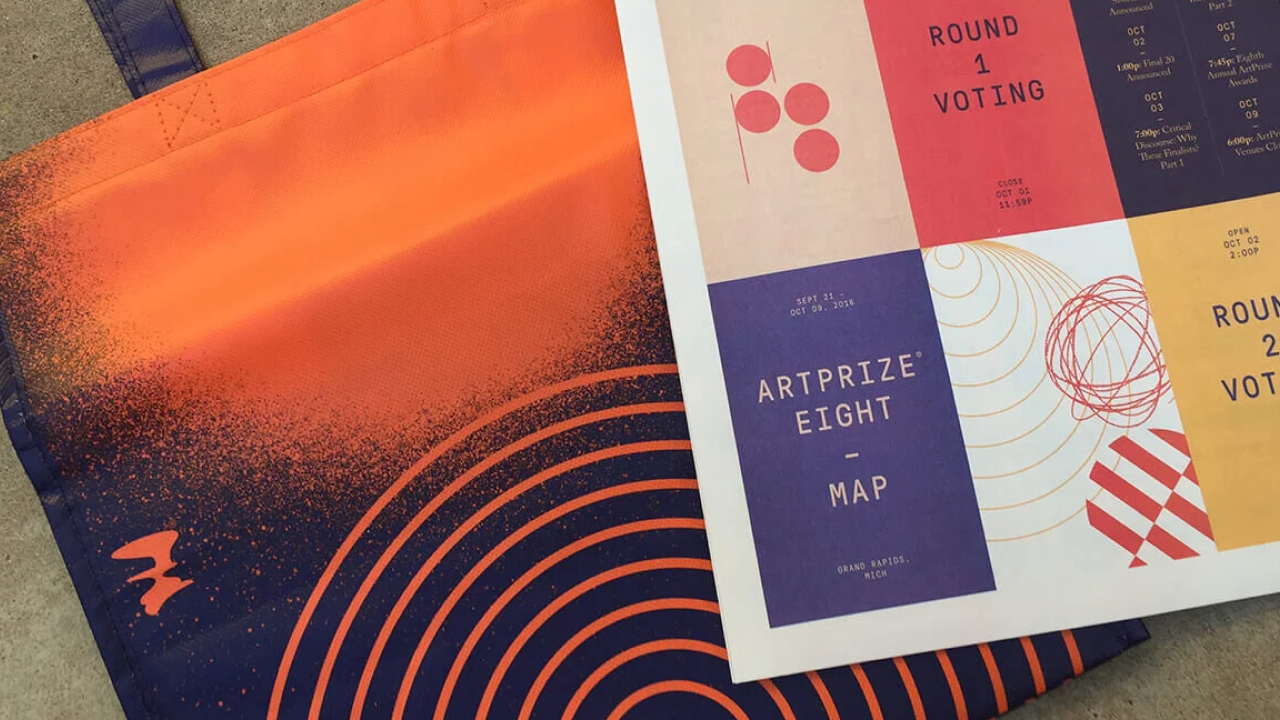
This past fall, I had the opportunity to attend ArtPrize in my hometown of Grand Rapids, MI. As defined on their website, ArtPrize® is an open, independently organized international art competition that is hosted by over 200 venues throughout downtown Grand Rapids. It is the world’s largest art competition, and 2016 marked its 8th year in existence. This year, event branding and design was on my mind because I was on the home stretch of designing the collateral for Phoenix Design Week collateral, and the ArtPrize 8 event branding was absolutely stunning.
This past fall, I had the opportunity to attend ArtPrize in my hometown of Grand Rapids, MI. As defined on their website, ArtPrize® is an open, independently organized international art competition that is hosted by over 200 venues throughout downtown Grand Rapids. It is the world’s largest art competition, and 2016 marked its 8th year in existence.

This year, event branding and design was on my mind (because I was on the home stretch of designing the collateral for Phoenix Design Week 2016 collateral), and the ArtPrize 8 event branding was absolutely stunning. It was designed by Conduit, a design studio based in Grand Rapids, and featured a bold color palette paired with a library of art-inspired patterns and textures masked into an abstract 8-shape. Together the elements created a distinctly identifiable design language for the brand. Conduit used the colors, patterns, and 8-shape in a myriad of ways, which created a rich, complex, and exciting image for the event.

Being the design geek that I am, I dare say I paid more attention to the brand system than the artwork at the event. Take a peek at some images of the brand in action below!

Read More
Around the Studio Melissa Balkon Around the Studio Melissa Balkon

Telling stories of art and failure at PechaKucha

One of the annual events of Phoenix Design Week is PechaKucha night. A pecha kucha—Japanese for "chit-chat"—is a roughly 6 1/2-minute talk with a rigid framework of 20 slides that auto-advance after 20 seconds. This year’s theme revolved around the idea of process, and I thought it might be fun to share about my so-far-unsuccessful quest to find "my art." Grab a seat and get ready to watch me fail!

One of the annual events of Phoenix Design Week is PechaKucha night. PechaKucha.org—Japanese for "chit-chat"—is a roughly 6 1/2-minute talk with a rigid framework of 20 slides that auto-advance after 20 seconds. As the translation alludes to, the purpose of the format is to force a talk that is delightfully light and brief—more like an anectode (or chit-chat) than a lecture. This year, several speakers dropped out at the last second and I was approached as a possible replacement. I was neck-deep in design for the Method + Madness Conference, so I must have had a moment of insanity when I agreed to do the talk. The theme revolved around the idea of process, and I thought it might be fun to share about my so-far-unsuccessful quest to find "my art."Its rare that I give a talk like this (heck, its rare that I give any kind of talk). The talk developed into more of a personal story, that ended up being really fun to share. In case you missed it, I did a little recording of the it, which you can watch below. Grab a comfy seat and get ready to watch me fail!

Read More
Around the Studio Melissa Balkon Around the Studio Melissa Balkon

2015 PHXDW Design by the Numbers

Back in July the 2015 Method + Madness conference was initially announced, and I approached the event chairs about getting involved. I met with Robert Renteria over coffee and, to my surprise, he asked if I'd take up the role of this year's Design Chair. The past months have been a whirlwind, and I thought it would be fun to break the project down by the numbers!
This post has been three months in the making. Back in July the 2015 Method + Madness conference was initially announced, and I approached the event chairs about getting involved. Phoenix Design Week (PHXDW) and the Method + Madness conference has played a critical role in my life, and I really wanted to find a way to give back this year and show my appreciation for everything I've gained from the event and the Phoenix Design Community (PHXDC) over the past several years. I met with Robert Renteria over coffee and, to my surprise, he asked if I'd take up the role of this year's Design Chair. After considering it for a few minutes, I cautiously agreed to come along for the ride. And what a ride it has been! This role has been one of the most challenging and rewarding things I've ever been a part of.

Robert kicked things off with the design of the PHXDW and M+M event logos, and set the overall design vision for the event. After a detailed discovery conversation with him, I was able to pick up where he left off and the fun began. I was lucky enough to get to design the program, signage, swag items and lots of social assets (just check the stats below!). The past few months have been a whirlwind, and I thought it would be fun to break the project down by the numbers! Plus, watch a cool animation of the PHXDW social graphics and check our portfolio soon for samples of the work.

phxdw-infographic-tiny.png
Read More

  Think we might be a good fit for you?

Let’s talk about how we can design your future.